What Is Ossium? Free OSS Helper FAQ (Pricing, Features & Use Cases)
What is ossium, what is it used for, is it free, and is ossium open source? Clear answers: free core product for discovering open source work and running GitHub Selfbot-not an open-source codebase.

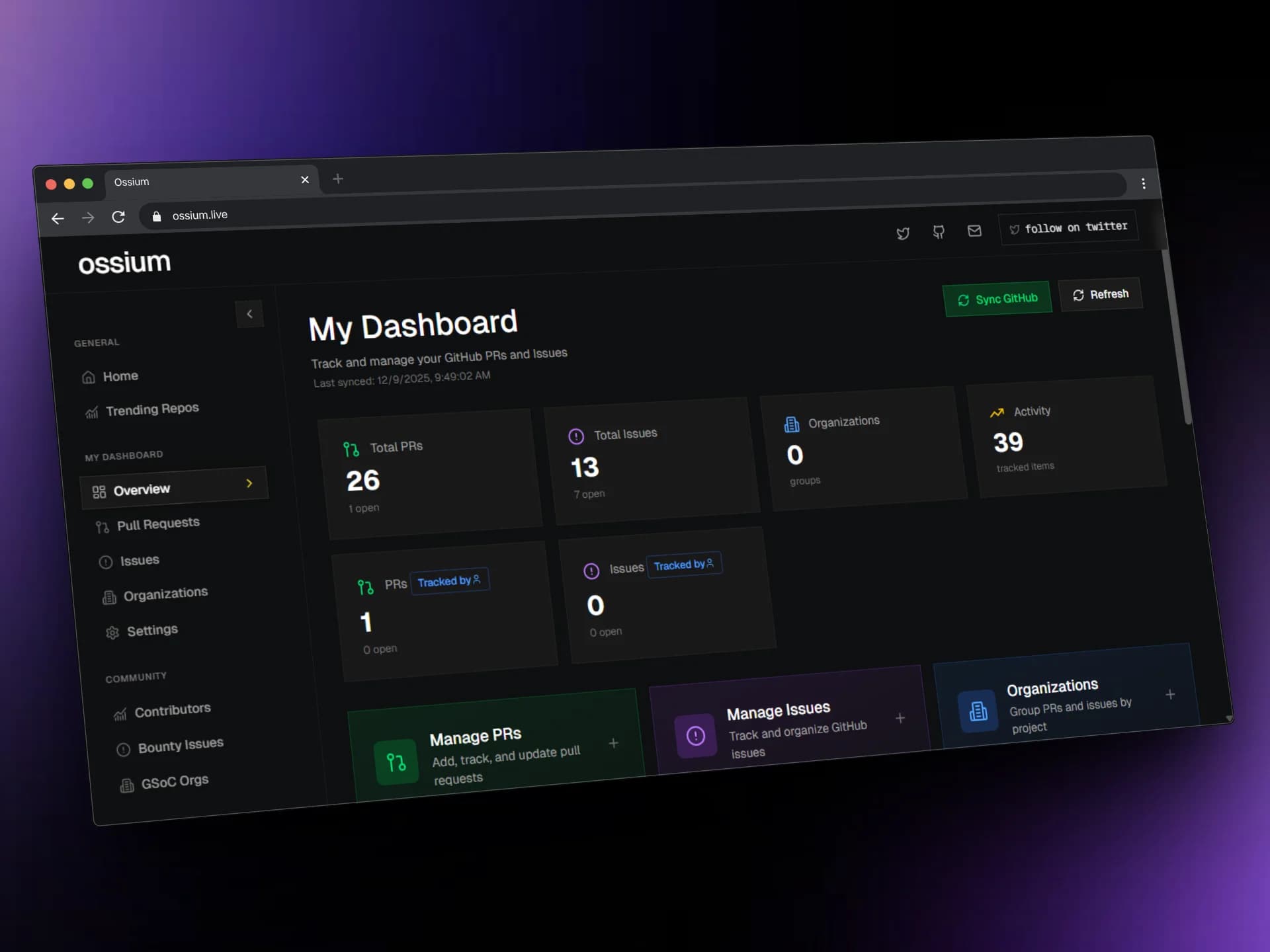
Ossium (often written ossium) is The True OSS Helper-a fast web platform for discovering open source work, contributing on GitHub, and helping maintainers welcome people to their repos.
This page answers the questions people actually search for: what it is, who it’s for, whether it’s free, whether ossium itself is open source, and how to start.
What is ossium?
Ossium is a product at ossium.in that brings discovery, contribution surfaces, and OSS program context into one place so you spend less time hunting through noisy GitHub searches and more time shipping PRs.
In plain language: GitHub is where the code lives; ossium is where many contributors find work and maintainers run GitHub Selfbot.
What ossium is built for:
- Discover high-quality open source projects quickly
- Find beginner-friendly and open issues
- Browse GSoC organizations and other OSS programs
- Run GitHub Selfbot (welcome messages & custom commands) on your repos
- Use many core features without logging in
- Keep ~90%+ of the product free for everyone
Important distinction: ossium helps you work with open source projects. That does not mean the ossium product/codebase is open source (see below).
What is ossium actually used for?
People use ossium to:
| Goal | Where on ossium |
|---|---|
| Find active projects to contribute to | Home, Trending |
| Find beginner-friendly / open issues | Find Issues |
| Welcome contributors on your repo | GitHub Selfbot |
| Explore GSoC organizations | GSoC |
| Browse mentorship-style programs | OSS Programs |
| See YC-backed OSS companies | YC-OSS |
| Learn from guides and Q&A | [Blog](/, Resources |
| Talk with an OSS-focused AI assistant | Ossistant |
| Earn via bounties | Bounties |
| Community discussion | Forum |
Typical users: students preparing for GSoC/Hacktoberfest, working developers who contribute in spare time, and maintainers who want their projects discovered.
Is ossium free?
Yes-the core product is free.
From the product FAQ and public docs:
- Browsing, discovery, GSoC tools, forum, and most flows are free
- You do not need an account just to explore many public pages
- Login unlocks alerts, GitHub Selfbot, and other personalized tools
- There is no paywall on core contribution discovery
What about Premium?
Ossium Premium is optional. It supports sustainability and unlocks extras (for example advanced alert rules, priority support, and early access-exact perks can evolve).
Public pricing has been positioned around:
- ≈ ₹17 / month or ≈ $0.19 / month
- Longer plans (6-month / yearly) at a lower effective monthly rate
Premium is not required to use ossium as your daily OSS helper.
Is ossium open source?
No. Ossium is not open source.
Ossium is a proprietary product operated at ossium.in. You use it as a free (and optionally Premium) service; you do not get rights to the ossium source code as an open-source project.
What is open source in this picture:
- The projects and repositories you discover and contribute to on GitHub (and elsewhere)
- Your own contributions to those projects
What is not open source:
- The ossium platform itself (product, branding, and application code)
If someone says “ossium is open source,” they usually mean “ossium is a helper for open source.” The accurate wording: ossium is an OSS helper, not an open-source product.
Do I need a GitHub account?
You can explore a lot of the site without any account. Sign-in (including GitHub-connected flows where applicable) unlocks personalized features like alerts and leaderboards.
How is ossium different from “just using GitHub”?
GitHub is the source of truth for repositories, issues, and pull requests. Ossium is a workflow layer on top of that world:
- Faster discovery with contribution-oriented filters and feeds
- Cross-repo tracking in one dashboard
- Curated program surfaces (GSoC, OSS programs, YC-OSS)
- Learning content, resources, forum, and Ossistant
See a dedicated comparison: Ossium vs GitHub Explore.
Who is ossium for?
- Beginners looking for good first issues and a calmer on-ramp
- Students preparing for GSoC and similar programs
- Regular contributors juggling multiple repos
- Maintainers who want projects listed when they meet eligibility
Can I add my open source project to ossium?
Yes-if it meets the criteria. Read Eligibility, then submit for review. Listings are reviewed so the catalog stays useful (active, properly licensed open source, etc.).
Is Ossistant free?
Ossistant is ossium’s AI assistant for open source questions (repos, contribution guidance, programs). It is free to use; signing in helps save chat history. Some extras may be tied to Premium for eligible users.
How do I get started?
-
Open ossium.in or go straight to /home
-
Browse trending or issues
-
Optional: create an account for alerts and GitHub Selfbot
-
For GSoC season, start with /home/gsoc
-
Read more guides on the [blog](/
How can I contact the team or suggest features?
- Email: help@ossium.in
- Contact form: /contact
- Forum: /home/forum
Short FAQ recap
What is ossium in one sentence?
A free web platform that helps you discover open source projects, track contributions, and prepare for programs like GSoC-without drowning in GitHub noise.
Is ossium free forever for core features?
Yes. Core discovery and contribution workflows are free; Premium is optional support + extras.
Is ossium open source?
No. Ossium is a proprietary product. It helps you contribute to open source; it is not itself open source.
Who built it?
See Who owns ossium? Founder & developer FAQ.
Where do I go first?
Start at /home or read How to find open source projects.